Remedial Massage and Mobility: Different Approaches That Can Support Easier Movement explores how hands-on remedial treatment and active mobility work can support movement in different ways. Remedial massage may help reduce muscular tension, promote relaxation and support movement comfort, while mobility training develops the strength, control and confidence needed to move actively through an appropriate range.
Feeling restricted does not always mean that one muscle simply needs to be stretched. Everyday physical load can come from repetitive positions, long periods sitting or standing, demanding work routines, limited movement variety, training habits and insufficient strength for particular movements. Looking at the bigger picture of how your body is feeling and responding can therefore be more useful than relying on one technique alone.
Understanding the difference between muscular tension and mobility
Feeling tight does not always mean you simply need more flexibility
Muscular tightness is a feeling that can be influenced by many factors. After sitting for several hours, completing a demanding training session or spending a stressful week at work, you may notice that certain movements feel less comfortable even if nothing has structurally changed.
Mobility, however, involves more than the ability to reach a particular position. It also involves having enough control and strength to move through an appropriate range with confidence. Someone may appear flexible in a passive position but still find it difficult to control that same range during an exercise or everyday task.
Could repeatedly stretching the area that feels tight overlook another part of the picture? Sometimes the body may benefit from developing strength and control rather than simply trying to increase flexibility. This is why massage and mobility training should not be treated as interchangeable services.
Remedial Massage and Mobility: Different Approaches That Can Support Easier Movement recognises these different roles. Massage provides hands-on support for muscular comfort, while active mobility work gives you an opportunity to practise movement and build capacity.
Daily physical load can influence how freely you move
Physical load does not come only from intensive exercise. Long periods in repetitive positions, limited movement during the working day, physically demanding tasks and a lack of appropriate strengthening can all influence how comfortable movement feels.
A person who works at a desk may train several times per week and still notice stiffness after remaining in similar positions for most of the day. Another person may move frequently at work but lack the strength or control required for particular ranges of movement.
Posture can form part of this conversation, but there is no single perfect position that needs to be maintained throughout the day. Changing position, having movement variety and developing sufficient physical capacity for everyday demands may be more practical than trying to hold one posture for hours.
If you are unsure whether muscular tension or movement capacity is currently the greater priority, discuss the bigger picture during your initial consultation. Your work, activity, exercise routine and goals can all provide useful context.
How remedial massage may support movement comfort
Relaxation can help the treatment feel more comfortable
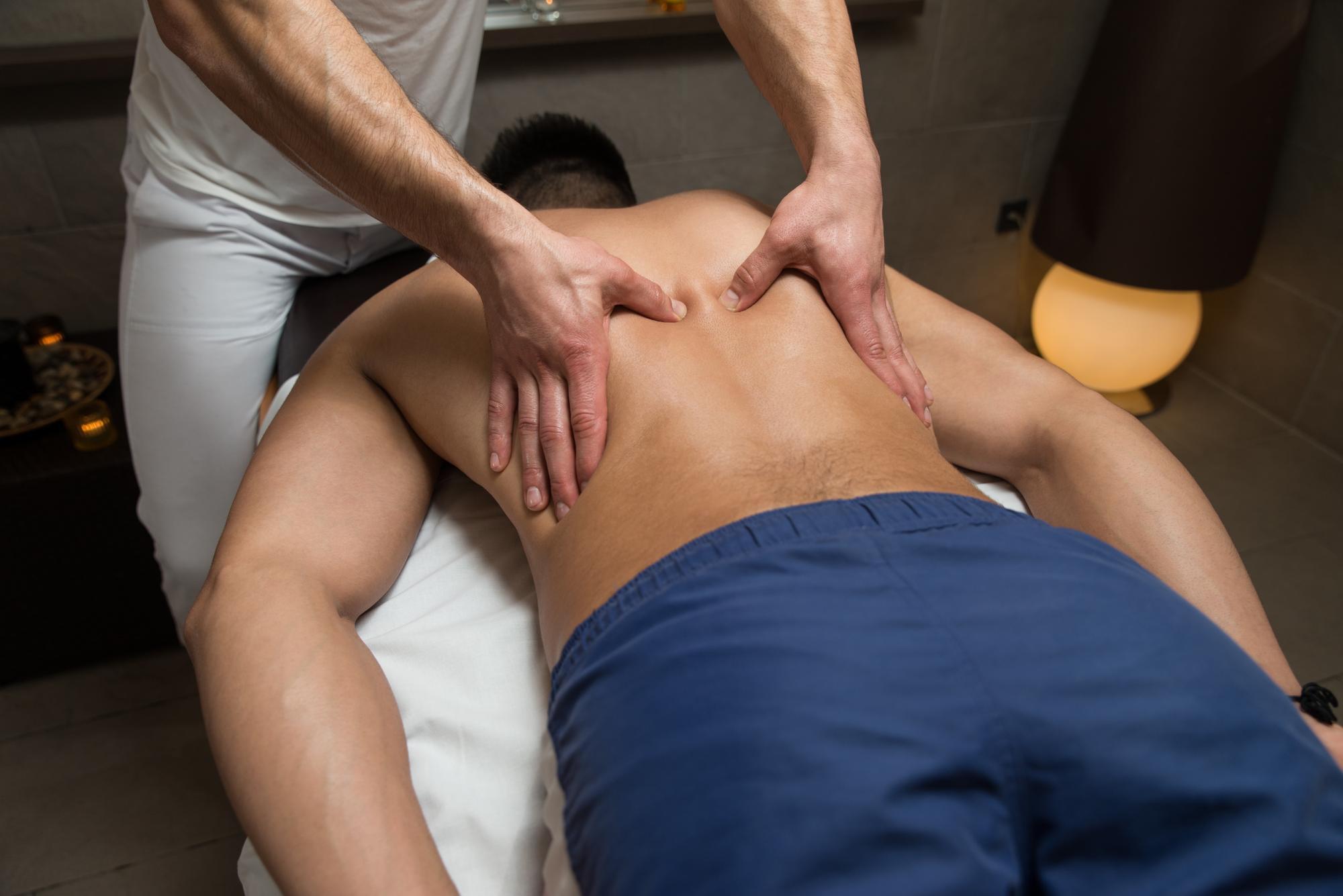
Holistic Remedial Massage is personalised according to how your body feels and responds on the day. Treatment may incorporate targeted remedial techniques, myofascial release and relaxation-focused elements when appropriate, with pressure adapted according to your sensitivity and preferences.
Relaxation is an important part of that process. When someone is in a heightened state of alertness, muscular tension and sensitivity may increase, making deeper touch feel less comfortable. Beginning gradually and creating a calm environment may support a greater sense of ease before more targeted techniques are introduced where appropriate.
Comfortable positioning, breathing and gradual hands-on techniques may also help you become more conscious of how your body feels when it is less tense. Recognising this contrast may make it easier to notice when muscular tension begins building again during work, training or everyday life.
Does a remedial massage need to be painful to be effective? No. Pressure can be adjusted according to your response, and stronger pressure does not automatically make a treatment more useful.
Common questions about remedial massage, bodywork, movement assessment, strength, mobility and recovery support show why personalised guidance matters before choosing an approach.
Book your initial consultation if you would like to discuss muscular tension, movement comfort and what you currently notice during everyday activity.
Massage can support comfort, but it does not build active mobility
Remedial massage may help reduce muscular tension and support a temporary feeling of greater ease during movement. It can also provide an opportunity to relax and become more aware of how your body feels when unnecessary tension is reduced.
However, massage alone does not develop the active strength and control required for mobility. If you want to become stronger within a particular movement range, active exercise is necessary.
This distinction is important when considering Remedial Massage and Mobility: Different Approaches That Can Support Easier Movement. Feeling more comfortable after massage may create a useful experience, but maintaining and developing physical capacity involves active participation outside the massage table.
Massage should also not be described as putting bones or nerves back into place or permanently correcting posture. Its appropriate role is to support muscular comfort, relaxation and movement comfort while recognising that other forms of activity may be relevant to your goals.
Mobility develops through active movement
Mobility combines range, strength and control
Mobility training involves actively moving through ranges that are appropriate for your current ability. Rather than simply holding a stretch, guided mobility work may involve controlled movements that develop strength and coordination within the range being used.
This can be particularly helpful for adults who feel stiff despite stretching regularly. If a movement feels unfamiliar or difficult to control, repeatedly trying to push further may not necessarily be the most useful strategy.
Professional guidance can help you learn technique, establish an appropriate starting point and progress range, resistance or movement complexity over time. The objective is not to force your body into extreme positions, but to develop useful movement capacity gradually.
What would be more useful for everyday life: reaching a position passively or being able to move into and out of it with confidence and control? For many people, active control is an important part of useful mobility.
At Stellar Wellness Studio, MOV LAB provides personalised movement support through one-on-one sessions and small groups. Personalisation happens within the movement session itself as the professional observes how you move, provides guidance and adapts exercises according to your current ability, goals and comfort.
Strength is an important part of mobility
Mobility and strength are closely connected because the body often needs muscular control to use a range confidently. Developing strength around a joint can help you manage movement rather than simply reaching a greater range passively.
This does not mean that every feeling of stiffness is caused by weakness. It means that strength is one factor worth considering when someone wants to improve movement quality over time.
For example, a person may find it easy to move a leg into a particular position with assistance but struggle to control that same movement independently. Appropriate strengthening may then become more relevant than simply attempting to stretch further.
No mobility or strength program can guarantee pain-free movement or prevent every injury. Sensible progression, appropriate technique and professional guidance may help reduce unnecessary exercise risk while supporting confidence.
Massage and mobility can complement each other
Each service has a different job
Remedial massage and movement training serve different but complementary purposes. Massage provides personalised hands-on support for muscular tension, relaxation and movement comfort, while movement sessions focus on strength, mobility, control and movement quality. One approach does not need to replace the other.
Someone may choose massage because muscular tension is making movement feel less comfortable after a demanding week. That same person may separately participate in mobility and strength work to improve how confidently they move through particular ranges.
Another client may already move well but value massage as dedicated time for muscular comfort and relaxation. There is no requirement to combine services simply because both are available.
This is why Remedial Massage and Mobility: Different Approaches That Can Support Easier Movement should be understood as a personalised combination rather than a fixed formula. The balance depends on your goals, current activity and what you would like support with.
If both hands-on treatment and guided movement are relevant to you, discuss your goals with Stellar Wellness Studio so the services can be considered according to their separate purposes.
Membership options can bring services together
Clients may choose membership options that combine complementary services while keeping each appointment clearly scheduled for its own purpose. Holistic Remedial Massage and movement classes can therefore sit within the same broader plan when included in the selected membership.
This can suit someone who wants regular guided movement to remain the active foundation of their routine while using massage to support muscular comfort and relaxation. Exact inclusions and current availability should be confirmed directly with Stellar Wellness Studio.
Stellar Wellness Studio operates within P3 Recovery in Ashmore while remaining a separate business. Any use of P3 Recovery facilities must be confirmed directly according to the relevant arrangement and availability.
A personalised plan does not mean using every service available. It means choosing support that makes sense for your individual goals and circumstances.
Choosing the right approach for your movement goals
Start with how your body currently feels and moves
There is no universal answer for whether massage, mobility work or a combination will be most relevant. Someone experiencing significant muscular tension may initially value hands-on remedial treatment, while another person may mainly need professionally guided strength and mobility work.
Your needs can also change over time. A demanding work period may make relaxation and muscular comfort more important, while another stage may create more opportunity to focus on strength, movement quality and physical capacity.
Symptoms that are sudden, intense, progressive, unexplained or otherwise concerning should be assessed by an appropriate health professional. Massage and movement services should not replace medical evaluation when symptoms require investigation.
Eligible clients whose private health fund policy includes remedial massage may be able to claim a rebate for qualifying treatment. Coverage and claiming conditions vary, so eligibility should be confirmed directly with the health fund provider. Stellar Wellness Studio can provide the relevant invoice for an eligible remedial massage treatment.
Your first consultation can clarify the next step
Remedial Massage and Mobility: Different Approaches That Can Support Easier Movement begins with understanding what you would like to work towards rather than expecting you to choose a specific technique or exercise yourself. You can explain where you feel muscular tension, which movements feel restricted and how your work or activity may be influencing your comfort.
You do not need to diagnose why a movement feels difficult. The conversation can focus on your experience, current activity and goals so the available support can be discussed appropriately.
Would a combination of feeling more relaxed and gradually becoming stronger through the ranges you use make more sense than simply trying to stretch harder? Contact Stellar Wellness Studio on +61 0485 862 212 to discuss your goals, confirm availability and decide which service may be the appropriate place to begin.
Attention | Bookings and enquiries are available via WhatsApp on +61 416 020 756. Session availability, suitability, health fund eligibility for remedial massage, MOV LAB options and access to P3 Recovery facilities must be confirmed directly with Stellar Wellness Studio before booking.
Remedial Massage and Mobility: Different Approaches That Can Support Easier Movement
Content update note
This content is reviewed periodically to reflect responsible communication practices for remedial massage, bodywork, movement, local search visibility and personalised wellness services in Australia.
FAQ
Can remedial massage improve my mobility?
Remedial massage may help reduce muscular tension and support movement comfort, which can make some movements feel easier temporarily. It does not replace the active strength and control required to develop mobility. If improving active range is your goal, appropriate movement and strengthening may also be useful.
Is stretching enough if I feel stiff?
Not always. Feeling stiff does not automatically mean a muscle simply needs to be stretched further. Strength, control, movement variety, repetitive positions and everyday physical demands may all influence how comfortable a movement feels, so professional movement guidance may help clarify what type of exercise is appropriate.
Does remedial massage need to be painful to support movement comfort?
No. Remedial massage does not need to be painful to provide targeted support. Treatment can begin gradually, allowing you to feel comfortable before deeper techniques are introduced if appropriate, with pressure adjusted according to your sensitivity and response.
Can remedial massage and mobility classes be included in the same membership?
Absolutely. Clients can combine Holistic Remedial Massage and movement classes within membership options where those services are included. Each service remains separately scheduled because massage provides hands-on support while movement sessions focus on active strength, mobility and control, and exact inclusions should be confirmed directly with Stellar Wellness Studio.
How do I know whether I should start with massage or movement?
Start by considering what you currently want support with. If muscular tension and relaxation are your main priorities, remedial massage may be a useful starting point, while strength, mobility and movement confidence are better developed through active exercise. Contact Stellar Wellness Studio on +61 0485 862 212 to discuss your goals and confirm the most appropriate available option.