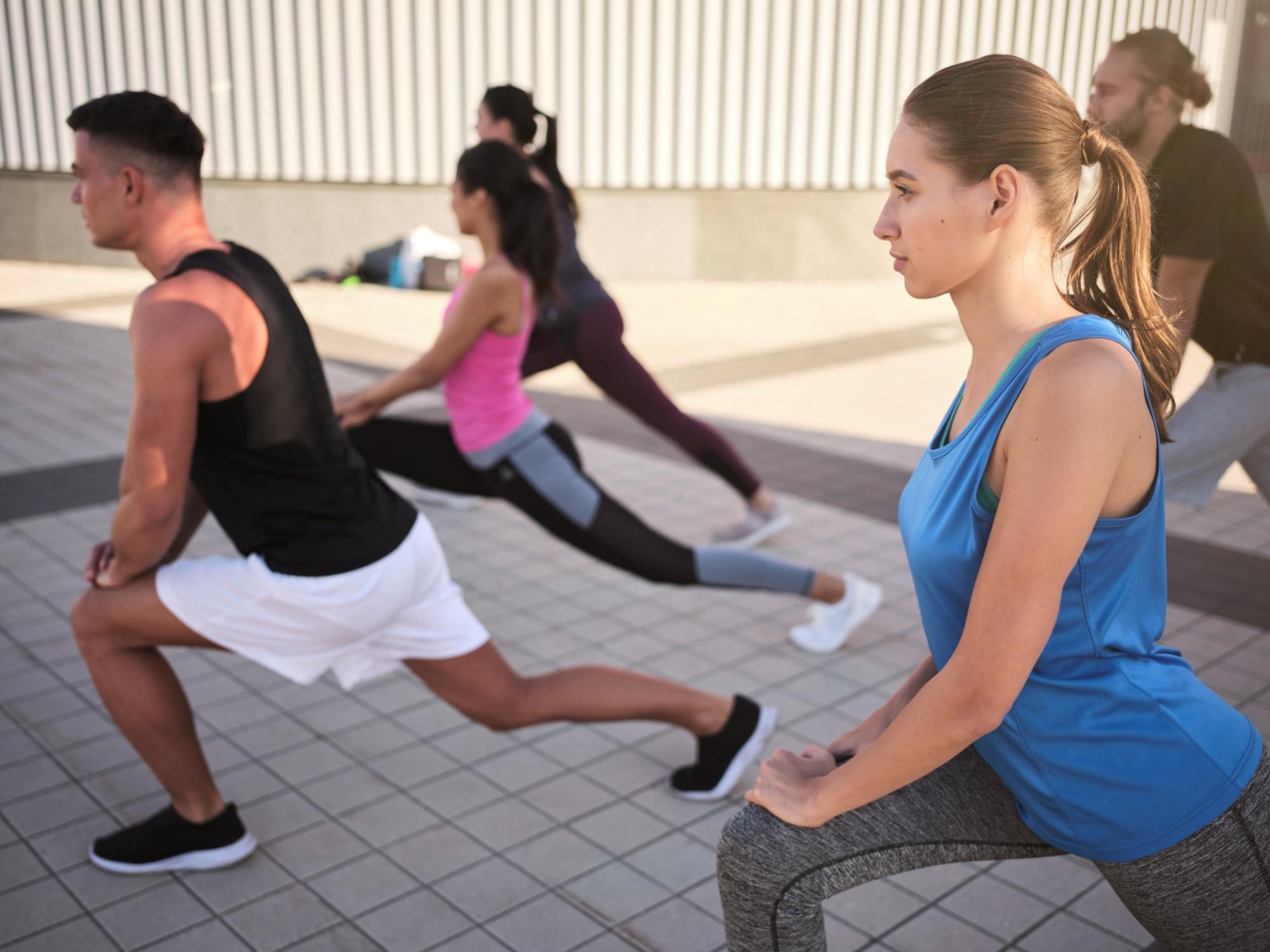
Functional Movement Classes Ashmore offers personalised movement support for adults who want to develop strength, mobility, control and confidence without relying on a generic gym routine. At Stellar Wellness Studio, MOV LAB combines functional movement, intelligent training and individual guidance in one-on-one sessions or small groups of no more than four people. Exercises and progression are tailored to current capacity, goals and movement priorities rather than expecting everyone to train in exactly the same way.
People arrive with different reasons for wanting more structured movement. Some have spent years working at a desk, others already lead active lives, and some are returning to exercise after time away. The purpose of personalised movement is to establish a useful starting point, develop physical capacity gradually and make training relevant to everyday life, without promising injury prevention, permanent correction or guaranteed physical results.
Personalised movement begins with a useful starting point
Consultation and assessment can guide the first session
The initial MOV LAB experience may include an in-person consultation and assessment, functional movement analysis and identification of priorities before or alongside the first session. This gives the trainer useful context about your current activity, goals and movement confidence. The process is designed to guide exercise choices rather than diagnose a medical condition.
Functional movement analysis can involve observing how you manage relevant movements and positions. Mobility, control, coordination, confidence and previous experience may all influence what is observed. The objective is not to produce a list of faults or decide that your body needs to be corrected.
Why does a starting point matter if your main goal is simply to become stronger or move better? Two people can share the same broad goal while needing very different exercise choices. One may already be comfortable using resistance, while another may benefit from becoming familiar with a movement before additional load is introduced.
For someone exploring Functional Movement Classes Ashmore, this personalisation is an important distinction from following a standardised class. Exercise range, complexity and resistance can be selected according to what is appropriate for the individual. The program can then evolve as confidence, strength and familiarity develop.
If you are unsure where to begin, mark an initial consultation with Stellar Wellness Studio and discuss your goals, current activity and whether you prefer one-on-one or small-group support.
Assessment does not mean searching for movement faults
Functional movement should not be reduced to a test of whether someone moves perfectly. Human movement varies naturally according to body structure, experience, confidence and the task being performed. A personalised assessment can provide useful information without turning normal variation into something that must be fixed.
An exercise that feels difficult may reflect limited familiarity rather than a fundamental problem. Another movement may feel comfortable but require a different level of resistance to create an appropriate strength challenge. Observation helps place these experiences in context.
Could a simpler exercise sometimes be the more intelligent choice? Yes. A well-selected variation can provide an opportunity to practise control and understand the task before greater complexity is introduced.
This approach keeps the focus on developing useful movement options. It avoids creating unnecessary fear about posture or technique while still recognising that guidance and appropriate progression can help someone train with greater confidence.
Common questions about remedial massage, bodywork, movement assessment, strength, mobility and recovery support show why personalised guidance matters before choosing an approach.
Strength and mobility can develop together
Functional strength is about useful physical capacity
Strength training does not need to mean maximum loads, competitive lifting or leaving every session exhausted. In a personalised setting, resistance is selected according to current capacity and the intended purpose of the exercise. Functional exercises and free weights may be used when appropriate.
Someone new to strength training may begin by learning a movement and developing confidence with resistance. An experienced client may need a different challenge to continue developing physical capacity. Both approaches can be useful because strength training should respond to the person rather than to a universal standard.
For active adults and people over 40, strength can form part of a broader approach to maintaining physical capacity and supporting long-term wellbeing. It may contribute to confidence with everyday tasks, recreational activities and continued participation in movement. These potential benefits should remain realistic and should not be described as guaranteed outcomes.
Progress can take several forms. Increasing resistance is one option, but greater control, a different comfortable range or a more demanding variation may also change the challenge. Intelligent training considers which type of progression actually supports the goal.
Mobility is more than trying to become flexible
Mobility training focuses on useful movement options rather than simply achieving the largest possible range. Having access to a range is only part of the picture. Being able to control movement within that range can also matter.
This is one reason strength and mobility can work together. A personalised exercise may allow you to explore a comfortable position while also developing the strength required to control it. The exact combination depends on your current capacity and goals.
Functional Movement Classes Ashmore can therefore support people who want more than a collection of stretches or isolated exercises. MOV LAB brings strength, mobility and movement quality into the same personalised framework. The aim is to make movement practice relevant rather than unnecessarily complicated.
What if greater mobility is not actually the most important priority for you? Assessment and conversation can help determine whether strength, control, confidence or another movement quality deserves more attention. The answer can change as training develops.
Movement quality gives training a clearer purpose
Quality does not require perfect technique
Movement quality is not about making every client look identical during an exercise. People can perform tasks in slightly different ways while still moving with suitable control and confidence. The trainer’s role is to help find options that make sense for the individual and the goal.
Technique remains useful, particularly when learning unfamiliar exercises or adding resistance. However, guidance should support understanding rather than create anxiety around small differences in movement. A client should be able to ask questions, receive feedback and gradually become more familiar with what they are doing.
This can be especially relevant for people who have felt uncertain in conventional fitness environments. Busy gyms and large classes may make it difficult to know whether an exercise is appropriate or how it could be adjusted. A smaller setting creates more opportunity for individual guidance.
MOV LAB small groups are limited to no more than four people. One-on-one support is also available for clients who prefer greater privacy or a more individually focused experience. Tell Stellar Wellness Studio which format you prefer when discussing current MOV LAB options.
Appropriate challenge matters more than maximum intensity
A productive movement session can be challenging without being excessive. The level of difficulty should reflect what the exercise is intended to develop and how the individual is responding. Maximum intensity is not required every time someone trains.
Sleep, work demands, stress and recent activity can influence how someone feels from one session to another. Personalised movement allows some flexibility while preserving the broader direction of the program. An adjustment does not automatically mean that progress has stopped.
For clients considering Functional Movement Classes Ashmore, this can create a more sustainable relationship with exercise. Rather than judging every session by fatigue, training can also be evaluated through control, familiarity, appropriate progression and consistency.
This does not mean sessions should always feel easy. Challenge is an important part of developing strength and capacity. The difference is that challenge is applied with a purpose rather than used as the only measure of quality.
Supportive movement can help people return gradually to activity
Movement after injury requires appropriate boundaries
Some people seek personalised movement after an injury or a period when their usual activity has been reduced. In these circumstances, Stellar Wellness Studio can discuss supportive movement and a gradual return when this is appropriate. The service is not physiotherapy or clinical rehabilitation.
Clearance may be required depending on the injury, current symptoms and relevant healthcare guidance. Restrictions or recommendations provided by an appropriate health professional should be respected when movement resumes. Personal training should not override clinical advice.
Symptoms that are sudden, intense, progressive, unexplained or otherwise concerning should be assessed by an appropriate healthcare professional. A movement assessment cannot diagnose their cause or determine whether medical treatment is required.
Once participation is appropriate, training may begin with manageable movements and gradually progress according to the individual. Strength, mobility, control, technique and sensible progression may support physical capacity, but they cannot guarantee that future injuries will be prevented.
Confidence can be rebuilt through appropriate practice
Time away from exercise can affect confidence as much as physical capacity. Someone may remember what they used to do but feel unsure about returning directly to the same loads or exercises. A gradual approach can provide space to become familiar with movement again.
The first stage does not need to replicate previous training. Simpler exercises, appropriate resistance and clear guidance may offer a more useful starting point. Progression can occur as confidence and physical capacity develop.
Bodywork may occasionally complement this movement-focused approach when muscular tension or relaxation is also relevant. Remedial massage and personalised bodywork are separate services at Stellar Wellness Studio and should not be assumed to be included with MOV LAB. Movement remains the primary focus of this program.
If you are returning to exercise and have relevant health or injury considerations, contact Stellar Wellness Studio to discuss suitability and whether additional clearance may be required.
Choosing functional movement support in Ashmore
A smaller environment can support individual attention
Stellar Wellness Studio operates within P3 Recovery in Ashmore on the Gold Coast, while remaining a separate business. The Stellar environment is calm, private and focused on quality rather than volume. This provides an alternative for adults who do not want the atmosphere of a conventional high-volume gym.
MOV LAB can be delivered through one-on-one sessions or small groups of no more than four people. Both formats maintain an emphasis on personalised movement, although the experience of training individually will naturally differ from participating alongside a small group.
The initial MOV LAB experience may also include the possibility of using the recovery pools at P3 Recovery after the first session as an optional benefit. This is subject to availability and direct confirmation. It should not be understood as permanent, ongoing or unlimited access to P3 Recovery facilities.
Functional Movement Classes Ashmore may appeal to office workers, active adults, people over 40 and clients who value movement quality, privacy and individual guidance. The appropriate format and starting point depend on personal goals rather than a predetermined pathway.
Training can evolve as your priorities change
A personalised program does not need to remain fixed. Someone may initially focus on mobility and movement confidence before gradually placing more emphasis on strength. Another client may already be physically active and want to improve movement quality or explore different functional exercises.
Your goals can also change as everyday life changes. Training that felt relevant during one period may need to be adjusted later. Ongoing communication helps keep movement connected to current priorities.
Would a program that adapts with you feel more useful than repeatedly following the same generic routine? Discuss your goals with Stellar Wellness Studio and mention whether you prefer one-on-one or small-group MOV LAB support. Current suitability and availability can then be confirmed directly.
Attention | Bookings and enquiries are available via WhatsApp on +61 0485 862 212. Session availability, suitability, health fund eligibility for remedial massage, MOV LAB options and access to P3 Recovery facilities must be confirmed directly with Stellar Wellness Studio before booking.
Functional Movement Classes Ashmore
Content update note
This content is reviewed periodically to reflect responsible communication practices for remedial massage, bodywork, movement, local search visibility and personalised wellness services in Australia.
FAQ
What are functional movement classes at Stellar Wellness Studio?
MOV LAB is the confirmed personalised movement program at Stellar Wellness Studio. It focuses on strength, mobility, functional movement, movement quality, intelligent training and long-term wellbeing. Sessions may be delivered one-on-one or in small groups of no more than four people.
Is a movement assessment part of the initial MOV LAB experience?
The initial MOV LAB experience may include an in-person consultation and assessment together with functional movement analysis and identification of priorities. This information can help guide personalised exercise choices. It should not be interpreted as a medical diagnosis or clinical assessment.
Do I need previous strength-training experience?
Previous strength-training experience is not a confirmed requirement for MOV LAB. Exercise selection and progression can be tailored according to current capacity, confidence and individual goals. Functional exercises and free weights may be used when appropriate.
Can MOV LAB support movement after an injury?
Supportive movement and a gradual return may be appropriate after injury when relevant clearance has been obtained. MOV LAB is not physiotherapy or clinical rehabilitation, and concerning symptoms require appropriate healthcare assessment. The training approach should respect any relevant professional guidance.
Can I choose between one-on-one and small-group sessions?
MOV LAB offers one-on-one sessions and small groups of no more than four people. The preferred format may depend on your goals, privacy preferences and current availability. Confirm your preferred option directly with Stellar Wellness Studio before booking.